When to Worry About Varicose Veins: An Encino Patient Guide
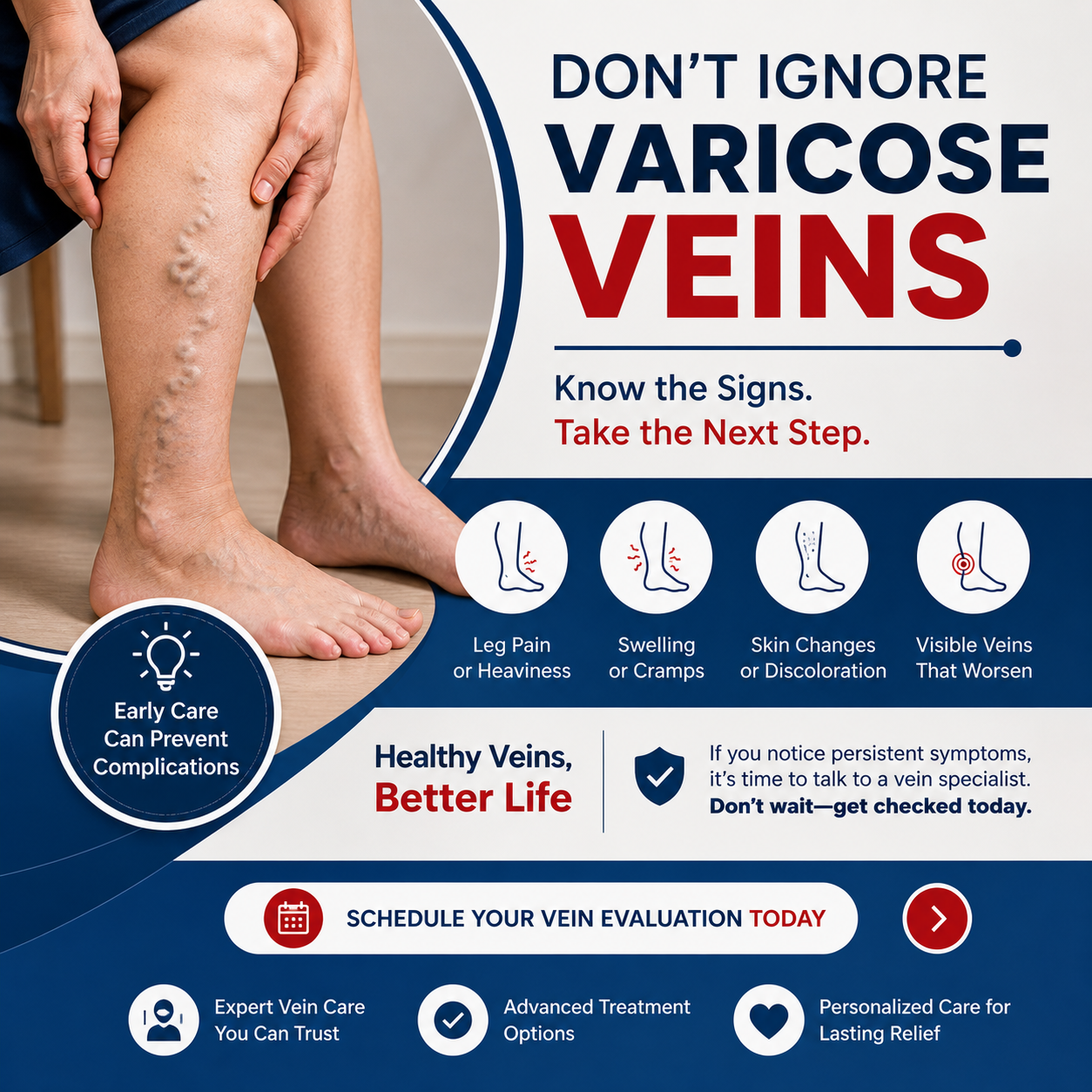
Most varicose veins are a cosmetic nuisance, not an emergency. But you should book a visit with a Vascular Surgeon or vein doctor if you notice new swelling, skin discoloration, a warm or tender vein, a sore near your ankle, or leg pain that doesn't ease up with rest. Sudden swelling paired with shortness of breath or chest pain is a 911 emergency, as it can indicate a blood clot that has traveled to the lungs. For Encino residents, a specialist for vein conditions can typically confirm what's going on with a quick, painless ultrasound in a single visit.
5 Key Takeaways
- Varicose veins are common and usually harmless, but persistent aching, heaviness, or swelling is worth a professional look.
- Warning signs like skin discoloration, ulcers, or a hot, tender vein mean it's time to see a vascular care specialist, not wait it out.
- Sudden shortness of breath, chest pain, or a swollen leg that appears out of nowhere can signal a blood clot treat this as an emergency.
- A Vein Doctor & Vascular Surgeon can usually diagnose the underlying cause with a simple ultrasound, no guesswork required.
- Encino patients have easy access to local vein care, so there's rarely a reason to put off getting checked out.
What Are Varicose Veins, Really?
Varicose veins are the twisted, bulging, often blue or purple veins that show up most commonly on the legs and feet. They develop when the tiny one-way valves inside your veins weaken or fail, letting blood pool instead of flowing efficiently back toward the heart. Over time, that pooled blood stretches and distorts the vein wall, creating the rope-like appearance most people recognize.
They're extremely common. A large share of adults will develop some degree of varicose or spider veins over their lifetime, and family history, pregnancy, prolonged standing, and age all raise the odds. For most people, they're simply a cosmetic concern. For others, they bring a real day-to-day burden: aching, heaviness, itching, or a burning sensation that tends to worsen the longer you're on your feet.
Varicose Veins vs. Spider Veins
It helps to know the difference. Spider veins are the fine, thread-like red or purple lines that sit just under the skin's surface; they're harmless and mostly a cosmetic issue. Varicose veins are larger, raised, and rope-like, and are more likely to come with physical symptoms. If you're unsure which one you're dealing with, a quick exam with a specialist for vein conditions will clear it up.
When Varicose Veins Are Just a Cosmetic Issue?
If your veins are visible but you don't have pain, swelling, or skin changes, there's usually no medical urgency. Plenty of people choose to monitor mild varicose veins, or pursue treatment purely for appearance's sake. Conservative steps that often help in this stage include:
- Wearing graduated compression stockings
- Elevating your legs when resting
- Staying active with regular walking or low-impact exercise
- Avoiding long stretches of standing or sitting without moving
- Maintaining a healthy weight to reduce pressure on leg veins
These measures won't make existing varicose veins disappear, but they can slow progression and ease mild discomfort.
Warning Signs That Mean It's Time to See a Doctor
This is where it really matters when to worry about varicose veins. Certain symptoms suggest the problem has moved beyond cosmetic and into something that needs professional evaluation. Contact a Vascular Surgeon or Vein Doctor & Vascular Surgeon if you notice:
- Persistent pain or heaviness in the legs that worsens by the end of the day or after standing
- Swelling in the ankle or leg that doesn't go down overnight
- Skin changes near a vein discoloration, thickening, or a rash
- A vein that feels hot, tender, or hard to the touch, which can indicate a surface clot (superficial thrombophlebitis)
- An open sore or ulcer, especially near the ankle, which can develop if blood isn't circulating properly
- Bleeding from a varicose vein that doesn't stop with direct pressure and elevation
- Veins that appear suddenly or worsen rapidly, rather than developing gradually over years
Left unaddressed, chronic venous insufficiency of this kind can occasionally progress to venous ulcers, so earlier evaluation tends to mean simpler treatment.
When It's a Medical Emergency?
A small number of varicose vein complications need immediate attention rather than a scheduled appointment. Call 911 or go to the nearest emergency room if you experience:
- Sudden, significant leg swelling paired with pain
- Shortness of breath
- Chest pain or a racing, fluttering heartbeat
- Coughing up blood
These can be signs of a deep vein thrombosis (DVT) that has broken loose and traveled to the lungs, known as a pulmonary embolism, a rare but serious complication of untreated venous disease. It's uncommon, but it's the reason vein specialists take new or worsening leg swelling seriously rather than dismissing it as cosmetic.
What Happens at a Vein Evaluation?
If you book a visit with a vascular care specialist, the process is usually quick and non-invasive. Most evaluations include:
- A physical exam of the affected leg or legs, checking for swelling, tenderness, and skin changes.
- A duplex ultrasound, a painless scan that shows blood flow and pinpoints exactly which valves or veins aren't working properly.
- A discussion of your symptoms and history, including how long you've had the veins, family history, and any prior clots.
- A treatment plan, ranging from conservative management (compression stockings, activity changes) to minimally invasive procedures like sclerotherapy, laser ablation, or radiofrequency ablation for more advanced cases.
Most modern vein treatments are outpatient procedures with short recovery times, so seeing a Vein Doctor & Vascular Surgeon doesn't necessarily mean a big commitment, it just means getting a clear answer.
Vein Care Services for Encino and Nearby Communities
Encino residents don't have to travel far for expert vein evaluation and treatment. Local vascular care specialist practices in and around Encino typically offer:
- Diagnostic ultrasound and vein mapping
- Sclerotherapy for smaller varicose and spider veins
- Endovenous laser or radiofrequency ablation for larger varicose veins
- Compression therapy guidance and follow-up care
- Ongoing monitoring for patients managing chronic venous insufficiency
Patients from Encino and surrounding San Fernando Valley communities including Tarzana, Sherman Oaks, Van Nuys, Woodland Hills, Reseda, and Studio City commonly turn to local vein clinics rather than driving to central Los Angeles, since having a nearby vein specialist means faster scheduling and easier follow-up visits.
Frequently Asked Questions
1. Can varicose veins go away on their own?
No. Once a vein valve is damaged, it doesn't repair itself. Compression stockings and lifestyle changes can ease symptoms and slow progression, but resolving the vein itself typically requires a procedure like sclerotherapy or laser ablation.
2. Are varicose veins dangerous?
Most of the time, no they're a cosmetic and comfort issue. In a small percentage of cases, they can lead to skin ulcers, bleeding, or blood clots, which is why persistent or worsening symptoms deserve a professional look.
3. Do I need a referral to see a vein specialist?
It depends on your insurance plan. Many Vein Doctor & Vascular Surgeon practices accept direct scheduling, but it's worth checking with your insurer, since some HMO plans require a primary care referral first.
4. How do I know if it's a varicose vein or a blood clot?
A varicose vein is usually visible, bulging, and not typically painful unless irritated. A blood clot often causes localized swelling, warmth, redness, and tenderness sometimes without any visible vein change. When in doubt, get it checked; an ultrasound can tell the difference in minutes.
5. What's the recovery like after varicose vein treatment?
Most minimally invasive treatments such as sclerotherapy, laser ablation, radiofrequency ablation allow patients to walk immediately and return to normal activity within a day or two. However, your vascular care specialist will provide specifics based on the procedure and the vein size.
This guide is for general educational purposes and isn't a substitute for a professional medical evaluation. If you're experiencing symptoms of a blood clot, sudden swelling, chest pain, or shortness of breath seek emergency care right away.
